Chest rigs are specialized load-bearing platforms designed for tactical, security, hunting, and professional outdoor applications. For brands, outfitters, and procurement teams, understanding the design and manufacturing considerations behind an effective chest rig system helps with sourcing reliable equipment or developing a custom product line.
This guide provides a manufacturer’s perspective on the key components, material choices, and design configurations that define a professional-grade chest rig, moving beyond end-user setup to focus on the specs that matter for production and bulk sourcing.
Chest Rig Design: Key Variables for Specification
For brands and procurement teams, specifying a chest rig involves decisions across several interconnected design variables. Understanding these helps in communicating precise requirements to a manufacturer.
Integrated Storage vs. Modular Base:
- Rigs with Integrated Pouches feature built-in storage, typically for magazines, which streamlines the design and can reduce weight by eliminating extra pouch layers. This approach is common in ready-made or mission-specific rigs (e.g., a dedicated “AK rig” or “SMG rig”).
- Modular Platform Rigs are built primarily around a MOLLE/PALS webbing panel. They offer maximum end-user customization, allowing the attachment of any compatible pouches. This is the most common and versatile professional standard. Manufacturing precision in the webbing grid (consistent 1-inch spacing) is critical for universal pouch compatibility.
Harness Design and Materials:
- The harness system—the straps and back panel—determines comfort and stability. Options range from simple nylon webbing for ultra-lightweight applications to padded, mesh-backed designs for prolonged wear and heavy loads. The choice of materials (e.g., 500D vs. 1000D nylon, mesh types) directly impacts durability, weight, and breathability.
Mission-Driven Configuration:
- The intended use dictates the core layout. An assault rig prioritizes a low profile and quick access to a few essential magazines. A patrol or general-purpose rig will have a larger panel area to accommodate more equipment like radios, medical kits, and navigation tools. Specialized rigs exist for roles like medical corpsmen or aviators, with layouts designed for specific gear sets.
In practice, many modern rigs use hybrid designs, such as an integrated magazine placard that attaches to a modular carrier, offering a blend of streamlined efficiency and customization.
 H valjaat rintakehä Rig
 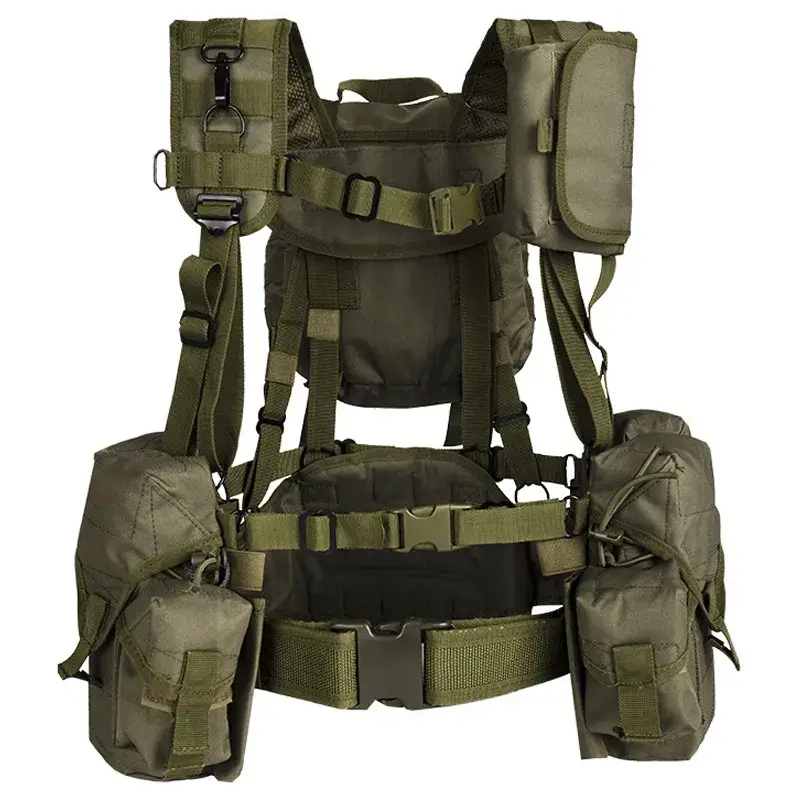 Load-Bearing Chest Rig
 Material & Manufacturing Considerations
These are key factors for brands to specify.
- Material Selection for Durability: The choice of fabric—such as 500D or 1000D Cordura nylon—directly impacts abrasion resistance, weight, and longevity. Considerations include water-resistant coatings, colorfastness, and the use of low-profile, quiet fabrics for hunting-specific applications.
- Modular Integration (MOLLE/PALS): As explored in our guide to MOLLE-standardit, the precision of the webbing grid is non-negotiable. Inconsistent stitching leads to poor pouch retention and a sub-standard product. This is a core competency for a reliable custom chest rig producer.
- Ergonomics and Load Management: A design must account for weight distribution. This involves the geometry of the harness straps, the use of padded mesh backing for ventilation, and the placement of stabilizing straps to prevent bounce. Manufacturing should ensure all strap attachment points are heavily reinforced with bartacking.
Selecting Components and Hardware for Custom Chest Rigs
A chest rig is a system of components. For procurement or custom design, each element requires a specification.
- Pouches and Ancillary Gear: The choice between sourcing standardized pouches or developing proprietary ones affects lead times and cost. Key types include lehtilaukut (with options for bungee, elastic, or flap retention), utility/GP pouches, and specialized carriers for medical kits, hydration, or communications equipment.
- Hardware and Retention Systems: The quality of buckles (e.g., ITW Nexus), ladder locks, zippers (YKK), and hook-and-loop fasteners is an indicator of overall quality. These components must be specified for durability and consistent performance in all environments.
Designing Chest Rigs for Different Missions and Users
Different use cases drive specific design features, which can inform a tailored product line.
- Tactical & Security: Prioritizes rapid access to ammunition and communications. Designs often feature a low-profile drag handle, integration points for armor panels, and radio pouches.
- Metsästys: Emphasizes quiet materials (brushed fabrics, silent magnetic buckles), configurations for binoculars or rangefinders, and compatibility with hydration bladders.
- Outdoor Professional (Photography, Forestry): Focuses on customizable organization for tools and tech, often utilizing larger utility pouches and protective padded compartments.
Partnering with a Professional Chest Rig Manufacturer
Turning design concepts into a durable, practical product requires specialized manufacturing expertise. A professional chest rig manufacturer brings essential knowledge in material sourcing, heavy-duty stitch patterns, and modular system construction.
Key partnership benefits include:
- Design for Manufacturability: Guidance on simplifying complex designs to improve durability and reduce production costs.
- Laadunvarmistus: Implementation of in-line and final inspection protocols to ensure each unit meets specifications for stitching, hardware function, and material integrity.
- Scalability & Customization: Ability to produce from small-batch custom chest rigs for specialized units to large-scale OEM runs for broader distribution, including custom branding, colors, and feature sets.
Looking to develop or source a professional chest rig system? Kokeneena taktinen liivi valmistaja, we provide end-to-end solutions from design consultation to production. Ota yhteyttä to discuss your requirements for custom, OEM, or ODM projects.
Usein kysytyt kysymykset (FAQ)
- What are the key material differences between 500D and 1000D nylon for a chest rig?
– 500D offers an excellent balance of strength and weight for most applications. 1000D provides maximum abrasion resistance for heavy-duty or prolonged field use, but adds weight and bulk.
- What is the typical lead time for developing a custom chest rig prototype?
– From approved tech packs, the prototyping phase typically takes 3-5 weeks, depending on material availability and design complexity, allowing for 1-2 sample iterations.
- Can you include proprietary attachment systems alongside standard MOLLE?
– Yes, hybrid systems are possible. We can incorporate specific laser-cut patterns, proprietary rails, or attachment points alongside standard PALS webbing to meet unique design requirements.
- What is the standard MOQ for a custom chest rig order?
– Minimum Order Quantities vary based on materials and complexity. We work with clients to establish viable MOQs that balance cost-effectiveness with production feasibility, often offering lower thresholds for designs using existing component libraries.












 Siirry sisältöön