Na conceção e fabrico de equipamento tático e de exterior de nível profissional, a seleção do material afecta o desempenho, a durabilidade e o peso. O tecido X-PAC, nascido da tecnologia sailcloth, tornou-se uma escolha de material para estas aplicações exigentes devido à sua construção projectada.
Este artigo apresenta uma panorâmica técnica do tecido X-PAC, examinando a sua composição, as principais propriedades e os casos de utilização adequados para informar as decisões de conceção e aquisição.
O que é o tecido X-PAC?
X-PAC é uma família de tecidos compósitos laminados originalmente desenvolvida por Dimensão-Polyant, O objetivo inicial do pano de vela era resistir ao ambiente marinho rigoroso. O seu objetivo inicial era resistir ao ambiente marinho rigoroso, resistindo à água salgada, à radiação UV e aos ventos fortes.
A excelente relação resistência/peso do tecido e a impermeabilidade inerente tornaram-no, desde então, o material preferido dos fabricantes de mochilas, coletes tácticos, bolsas e abrigos de alto desempenho.
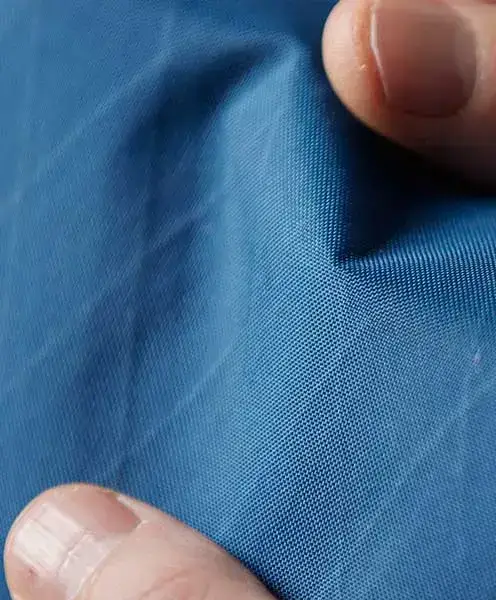
A construção em camadas do tecido X-PAC
O desempenho do X-PAC resulta da sua estrutura laminada de várias camadas:
- Tecido da face exterior: Trata-se normalmente de um tecido de nylon (por exemplo, 210D, 420D) ou de poliéster, que constitui a primeira linha de defesa contra a abrasão e os arranhões. Esta camada é frequentemente tratada para aumentar a resistência aos raios UV.
- Reforço X-Ply: A caraterística principal do tecido X-PAC é a sua camada de camadas cruzadas (X-ply). Esta grelha de fibras diagonais a 45 graus (frequentemente fabricadas em Vectran ou poliéster) é laminada no tecido. A orientação diagonal distribui a tensão uniformemente, evitando rasgões e estiramentos. Pense nisto como os vergalhões no betão - acrescenta integridade estrutural.
- Barreira impermeável: Uma película monolítica, geralmente de politereftalato de etileno (PET), é permanentemente ligada às camadas. Isto cria uma barreira à prova de água que não depende de um revestimento de superfície, que pode desgastar-se com o tempo.
- Revestimento interior: Uma camada de tecido leve, geralmente de poliéster, protege a película impermeável da abrasão interna e proporciona um acabamento suave para o interior do equipamento.
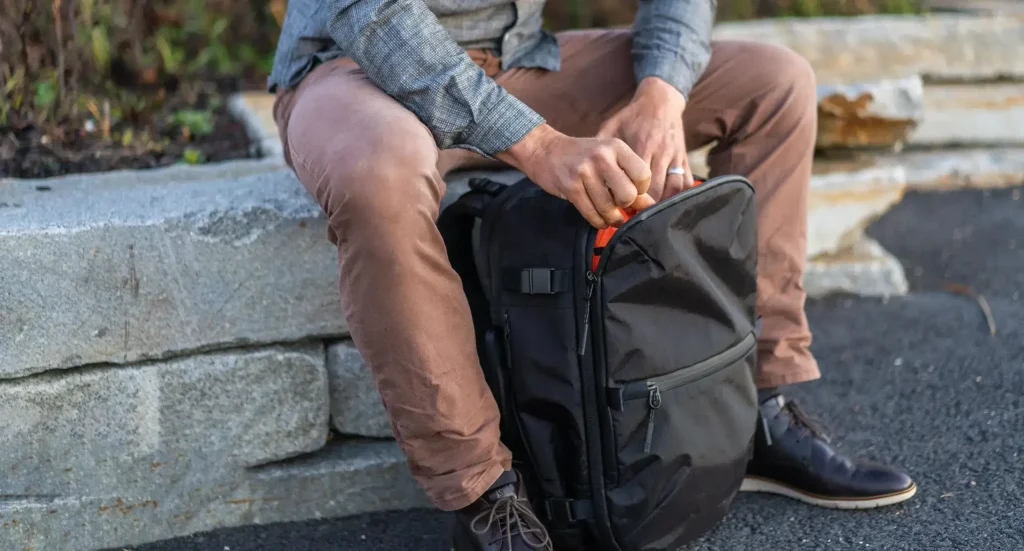
Tecido X-PAC: Principais caraterísticas de desempenho e comparações
O X-PAC oferece um conjunto distinto de propriedades quando comparado com outros tecidos técnicos comuns, como o Cordura e o nylon ripstop normal.
- Resistência ao rasgamento e estabilidade dimensional: O reforço de camadas cruzadas confere à X-PAC uma elevada resistência ao rasgamento e uma estabilidade dimensional excecional. Isto significa que as mochilas e os coletes fabricados em X-PAC têm menos probabilidades de se esticarem ou deformarem sob carga, o que é fundamental para o equipamento que tem de manter a sua forma, como suportes de placas modulares.
- Eficiência de peso: Devido à sua construção laminada, o X-PAC pode atingir uma resistência ao rasgamento comparável à de tecidos muito mais pesados, de camada única. Por exemplo, o X-PAC VX21 (aproximadamente 5,9 oz/yd² com uma face 210D) oferece caraterísticas de desempenho que são frequentemente comparadas com as do nylon 1000D Cordura mais pesado (aproximadamente 10 oz/yd²).
- Impermeabilização inerente: Ao contrário do cordura normal ou do nylon ripstop, que requerem um revestimento repelente de água durável (DWR) separado para eliminar a água, a impermeabilização do X-PAC é parte integrante da sua estrutura laminada. Isto resulta numa resistência à água mais consistente e duradoura.
É importante notar que, embora altamente impermeável, o tecido não é respirável, o que o torna mais adequado para aplicações em que a proteção à prova de água tem prioridade sobre a ventilação.
Variantes comuns do X-PAC e suas aplicações
A série X-PAC inclui diversas variantes adaptadas a diferentes necessidades. O quadro seguinte apresenta alguns tipos comuns:
| Variante X-PAC | Tecido para o rosto | Aprox. Peso (oz/yd²) | Aplicações típicas |
| VX21 | Nylon 210D | 5.9 | Mochilas de uso diário, bolsas para acessórios, organizadores leves |
| VX42 | Nylon 420D | 7.5 | Mochilas resistentes, coletes tácticos, equipamento que requer uma elevada resistência à abrasão |
| RX30 | Poliéster 300D | 5.5 | Mochilas ultra-leves, mochilas de corrida, vestuário exterior onde a flexibilidade é fundamental |
(Referência: Documentação da série Dimension-Polyant X-PAC)
Aplicações do X-PAC em equipamento profissional e tático
As propriedades do X-PAC tornam-no adequado para uma gama de aplicações exigentes:
- Equipamento tático: A sua estabilidade é ideal para os suportes de placas modulares e para os peitorais que devem manter a sua forma sob o peso de placas e carregadores. É igualmente utilizado para os cintos de serviço, bolsas médicas, e bolsas de administração, onde a organização e a durabilidade são fundamentais.
- Mochilas técnicas: Muitos fabricantes de mochilas ultraleves e de expedição utilizam o X-PAC devido à sua combinação de baixo peso, elevada impermeabilidade e resistência à rutura.
- Estojos de proteção e organizadores: O revestimento interior liso e a estrutura rígida fazem dele uma excelente escolha para malas de eletrónica, rolos de ferramentas e organizadores EDC, protegendo o conteúdo de riscos e impactos.
Cuidados e manutenção do equipamento X-PAC
Os cuidados adequados ajudam a manter a integridade dos tecidos laminados. Para preservar o equipamento X-PAC:
- Limpeza: Limpar com um pano húmido e sabão neutro. Para uma limpeza mais profunda, lavar suavemente à mão em água fria. Evitar a lavagem na máquina e os detergentes agressivos.
- Secagem: Secar ao ar livre, longe de fontes de calor diretas. Não secar à máquina nem colocar perto de um radiador, pois o calor elevado pode provocar a delaminação das camadas.
- Armazenamento: Guardar num local fresco e seco. Para um armazenamento a longo prazo, assegurar que o equipamento está completamente seco para evitar o bolor.
Para reparações, utilizar Fita adesiva tenaz ou kits de reparação específicos X-PAC para remendar pequenos rasgões.
Fabrico com tecido X-PAC
Do ponto de vista do fabrico, o X-PAC comporta-se de forma diferente dos têxteis tecidos normais. A sua estrutura laminada requer técnicas específicas, como a aplicação de fita de costura, para manter todo o seu potencial de impermeabilidade. É também menos flexível do que alguns nylons, o que influencia as escolhas de design para mochilas e sacos que requerem uma modelação complexa.
Como fabricante de equipamento tático e de exterior Com mais de 15 anos de experiência desde 2009, temos experiência direta de trabalho com X-PAC e outros tecidos laminados de alto desempenho. Compreendemos as suas caraterísticas de manuseamento e podemos aconselhar sobre optimizações de design para potenciar os seus pontos fortes, tais como a sua estabilidade dimensional e durabilidade leve.
Se estiver a desenvolver uma linha de produtos e a considerar X-PAC, Cordura ou outros materiais técnicos, podemos fornecer informações valiosas. Oferecemos serviços de fabrico por encomenda e pode produzir mochilas, coletes e bolsas tácticas de acordo com as suas especificações exactas, utilizando o material que melhor se adapta aos seus requisitos de desempenho e orçamento.
Contactar-nos para discutir como podemos ajudar a dar vida ao design do seu produto.




 Pular para o conteúdo