Choosing the appropriate camouflage pattern for tactical uniforms is a decision impacting operational effectiveness, safety, and mission outcomes. The evolution of U.S. Army Combat Uniform (ACU) patterns over the past two decades highlights a continuous effort to improve effectiveness.
This guide provides an objective overview of the Model universal de camuflaj (UCP), Model de camuflaj operațional (OCP), și MultiCam pattern, covering their history, performance, and typical applications.
De ce sunt importante modelele de camuflaj
Effective camouflage functions by disrupting the recognizable outline of the human form. It uses a combination of colors and shapes that blend with a specific environment, making detection more difficult. The right pattern for a given mission or role can enhance concealment in various terrains, from dense woodland to arid desert or urban settings.
For professionals involved in procuring or manufacturing tactical gear, understanding these patterns helps meet client needs in defense, security, and outdoor industries.
1. Model universal de camuflaj (UCP)
History and Development
Introduced in 2004 by the U.S. Army, the Universal Camouflage Pattern (UCP) aimed to serve as a single solution for urban, woodland, and desert environments. Its digital, pixelated design combined gray (50%), tan (25%), and green (25%) to replace older patterns like the Woodland Battle Dress Uniform (BDU).
Documented Performance and Limitations
In practical use, the pattern’s high proportion of gray was found to be less effective in many operational environments. Official reports, including those from the U.S. Army Program Executive Office (PEO) Soldier, indicated that it provided insufficient concealment in the predominantly green terrain of Afghanistan and the sandy deserts of Iraq. Its performance under night-vision equipment was also noted to be inconsistent.
Articol conex: Understanding NIR Compliance
Current Status and Applications
The U.S. Army began phasing out UCP in 2015 and completed its replacement by 2019. Today, UCP-patterned gear is primarily found in surplus markets and is sometimes used for applications where low cost is a primary factor, such as in recreational activities like airsoft or for certain non-tactical training exercises.
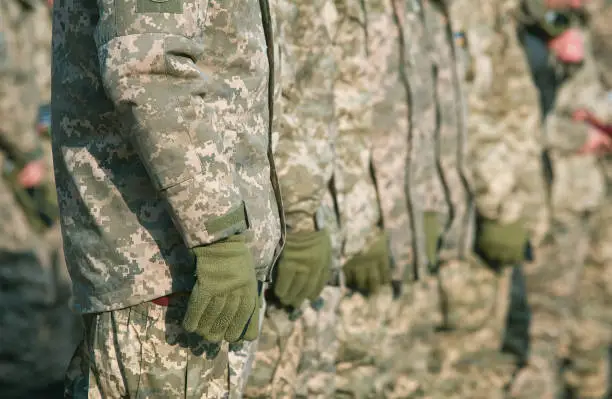 Soldiers wearing uniforms in Universal Camouflage Pattern (UCP)
 2. Model de camuflaj operațional (OCP)
History and Design Evolution
The Operational Camouflage Pattern (OCP) was adopted by the U.S. Army as its standard pattern in 2015. The pattern, which the U.S. Air Force also later adopted, uses a non-pixelated design of greens, tans, and browns. It was developed from the “Scorpion” pattern, which was originally created by Precizie Crye.
Technical Characteristics and Advantages
OCP is designed to perform effectively across a range of temperate and arid environments. The pattern’s color palette and organic shapes are intended to provide better blending in common operational settings like Middle Eastern scrubland and European woodland. The fabrics used for OCP uniforms often incorporate features like flame resistance and are standardized for consistent performance under night-vision devices.
Industry Applications
As the current standard for the U.S. Army and Air Force, OCP is the primary pattern for official procurement contracts. Its balanced performance and cost-effectiveness also make it a common choice for law enforcement agencies, security firms, and outdoor professionals who operate in mixed terrains.
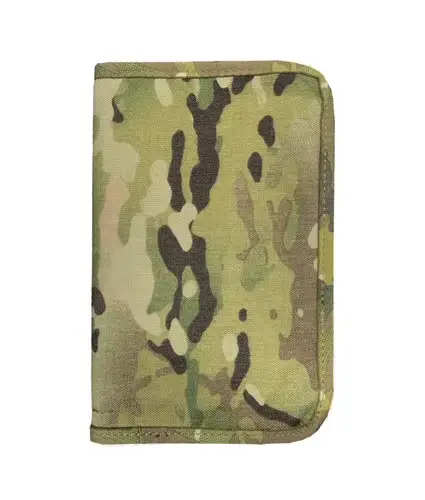 Tactical map pouch in Operational Camouflage Pattern (OCP)
 3. MultiCam
History and Design Philosophy
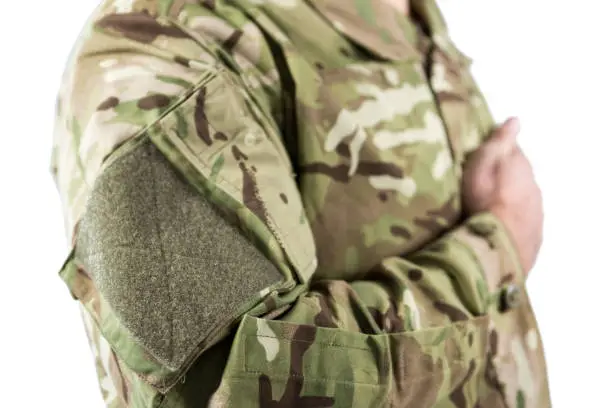
MultiCam was developed by Crye Precision and introduced in the early 2000s. Its design uses a combination of seven colors in gradient layers to create a three-dimensional effect intended to work in a wide variety of environments, from woodland and desert to transitional zones.
Technical Strengths and Adoption
The pattern is known for its high degree of versatility across changing environments. While not adopted as the standard-issue pattern for the entire U.S. Army, MultiCam has been widely used by U.S. Special Operations Command (USSOCOM) and has been adopted by numerous other military and law enforcement units globally, including forces in the United Kingdom and Australia.
Commercial and Professional Use
MultiCam is often selected for high-performance applications where its all-terrain effectiveness is a priority. It is commonly found in gear designed for special operations, professional security details operating in diverse regions, and high-end commercial tactical products.
UCP vs. OCP vs. MultiCam: Comparație rapidă
| Caracteristică | UCP | OCP | MultiCam |
| Primary Environment | Urban/Gray Settings | Mixed/Temperate & Arid | All-Terrain/Variable |
| Pattern Type | Digital/Pixelated | Organic/Non-Pixelated | Organic with Gradient Layers |
| Typical Greutatea țesăturii | Medium (≈12 oz) | Medium (≈10–12 oz) | Light to Medium (≈8–10 oz) |
| Statutul militar | Phased out (2004–2019) | U.S. Army & Air Force Standard | SOCOM & NATO Ally Standard |
Selecting the Appropriate ACU Camouflage Pattern
The choice between these patterns depends on the end-user’s specific needs:
- For budget-conscious procurement or specific urban training scenarios, surplus UCP gear may be a consideration.
- For standard-issue compliance with the U.S. military or for general-purpose use in mixed terrains, OCP is the most direct and cost-effective choice.
- For elite units, international contracts, or operations requiring maximum adaptability across unpredictable environments, MultiCam® remains a leading option.
Partner with Us for Custom Tactical Gear
Ca un producător de echipament tactic personalizat with 15+ years of experience since 2009, we understand that pattern selection is only one part of the equation. The quality of the materials, the precision of the construction, and compliance with required standards are equally important.
We produce a wide range of custom tactical products, including veste, pungi, și packs, and can manufacture them in specialized patterns to meet your specifications. Our focus is on delivering durable, reliable gear that meets the demands of professionals.
If you are sourcing tactical gear for your organization or clients, we welcome the opportunity to discuss your requirements and how our manufacturing capabilities can meet them.











 Salt la conținut