Backpack frames are important components of load-carrying systems, designed to manage weight and enhance stability. For military, law enforcement, and outdoor professionals who carry heavy, essential gear, the type and quality of the frame are key determinants of performance, endurance, and comfort.
This guide provides a detailed overview of backpack frames, explaining their function, the key differences between internal and external backpacks, and the considerations for selecting the right frame for demanding applications.
The Primary Function of a Backpack Frame
The core purpose of a frame is to efficiently transfer the weight of a load from the shoulders to the stronger skeletal structure of the hips and pelvis. Without a frame, the full weight of the pack pulls directly downward on the shoulder straps, leading to rapid fatigue, shoulder strain, and potential back pain.
A properly fitted frame system distributes this weight, aligns the load with the body’s center of gravity, and allows for safer and more efficient movement under load.
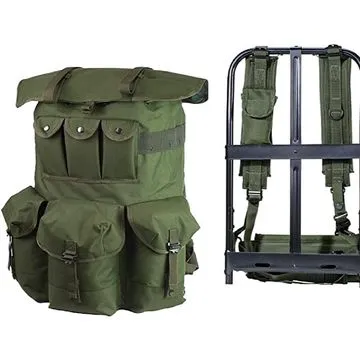 Olive drab ALICE pack with external frame, showing multiple pockets and padded straps
 Key Benefits of a Framed Backpack System
- Optimized Load Distribution: By shifting the weight to the hip belt, a frame reduces pressure on the shoulders and spine. This is essential for carrying loads over 30 lbs (approximately 14 kg) for extended periods, as is common in tactical and expedition scenarios.
- Enhanced Stability and Balance: A rigid frame prevents the pack from shifting and sagging, which is important for maintaining balance on uneven terrain, during rapid movement, or in situations requiring precise footing.
- Improved Ventilation: Many frame systems, particularly internal frames, are designed to create a space between the pack and the user’s back, allowing for better airflow and reducing sweat buildup.
- Increased Pack Durability: The frame absorbs much of the stress and strain that would otherwise be placed directly on the fabric and seams of the backpack, thereby extending the pack’s operational lifespan.
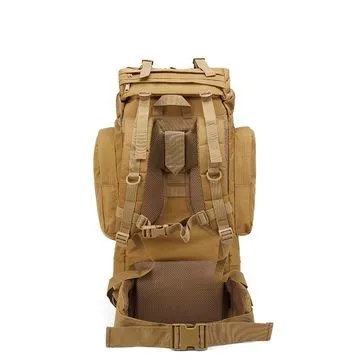
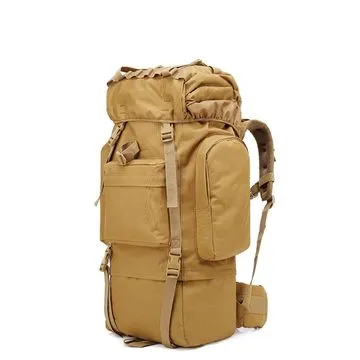 Internal frames are integrated into the pack, often indicated by a close-to-body design, a slightly curved shape to match the spine.
 Internal Frame vs. External Frame Backpacks: Key Differences
The choice between an internal and external frame depends heavily on the specific application.
1. Internal Frame Backpacks
These packs feature a frame structure—typically made of aluminum stays, carbon fiber rods, or a plastic sheet—sewn into the backpack’s internal compartment.
Πλεονεκτήματα:
- Profile: Sleek, low-profile design that hugs the body, reducing snagging and improving mobility in tight spaces like dense brush or urban environments.
- Balance: Excellent stability and center of gravity, making them ideal for technical terrain where balance is key (e.g., climbing, scrambling).
- Ευελιξία: The most common type for modern tactical, hiking, and mountaineering packs.
Μειονεκτήματα:
- Εξαερισμός: Can be less ventilated than some external frame designs, though many modern models address this with tensioned mesh backs.
- Load Specialization: Generally less effective than external frames at carrying very heavy, bulky, or non-compressible items.
2. External Frame Backpacks
These packs feature a rigid frame, traditionally made of aluminum or polymer, to which the pack bag and suspension system are attached.
Πλεονεκτήματα:
- Εξαερισμός: The space between the frame and the user’s back provides better airflow.
- Load Management: Excels at carrying heavy, bulky, or odd-shaped loads (e.g., communication equipment, large medical kits, game meat) by keeping the weight high and close to the spine.
- Προσαρμογή: Often provides more external lashing points for securing gear outside the main pack bag.
Μειονεκτήματα:
- Profile: The frame can snag on vegetation, wires, or in confined spaces.
- Center of Gravity: The load sits further from the body, which can affect balance on technical or uneven trails.
Common Frame Materials and Their Properties
- Aluminum Alloys: A standard for its excellent balance of strength, durability, and cost-effectiveness. It is relatively easy to repair in the field if bent.
- Ίνα άνθρακα: Used in high-performance applications for its exceptional strength-to-weight ratio. It is rigid and lightweight, but can be more expensive and is susceptible to impact damage.
- High-Strength Polymers/Thermoplastics: Often used in molded frames or sheets (e.g., HDPE). These offer good rigidity and are resistant to corrosion, making them a durable choice for a wide range of conditions.
Selecting the Appropriate Frame for Your Needs
Consider the following factors when specifying or procuring a framed backpack:
- Primary Use Case: Is the pack for direct-action tactical missions, long-range patrols, hunting, or mountaineering? Internal frames are typically preferred for dynamic movement, while external frames excel in logistical or load-hauling roles.
- Average Load Weight: For loads consistently over 50 lbs (23 kg), the superior load-bearing structure of an external frame or a heavy-duty internal frame system is necessary.
- Operational Environment: Dense, cluttered environments favor the low profile of an internal frame. Open or well-established trails can accommodate the advantages of an external frame.
- User Fit and Adjustability: A frame is only effective if it fits the user. Look for systems with adjustable torso lengths and hip belts to ensure the load is correctly transferred to the hips.
FAQs About Backpack Frames
1. What’s the difference between a framed and frameless backpack?
Framed backpacks use structures to distribute weight and improve stability, ideal for heavy loads. Frameless backpacks are lighter but less supportive, suited for light gear.
2. Can I add a frame to a frameless backpack?
Generally, no. A frameless pack lacks the internal structure and dedicated compartment for a frame sheet or stays. Attempting to retrofit one would not integrate with a hip belt effectively and is not recommended.
3. How do I know if a backpack frame fits correctly?
The key indicator is where the weight rests. When properly fitted and adjusted, the hip belt should cradle the iliac crest (the top of your hip bones) and bear 80% or more of the pack’s weight. The shoulder straps should stabilize the pack without bearing significant downward force.
4. How do I choose the right frame material?
Aluminum is durable and affordable, carbon fiber is lightweight and strong, and polymers offer flexibility. Consider load weight and mission length.
5. Are backpack frames uncomfortable?
Modern frames with padded hip belts and adjustable suspensions are designed for comfort. Proper fitting ensures ease of use.
Manufacturing Expertise in Framed Backpack Systems
The effectiveness of a backpack frame is determined by the synergy between the frame itself, the suspension system, and the pack bag. As a manufacturer with over 15 years of experience, we specialize in the engineering and production of tactical backpacks and rucksacks.
Our expertise includes:
- Designing and sourcing robust frame systems tailored to specific load-bearing requirements.
- Integrating frames with high-quality suspension systems featuring padded hip belts and adjustable shoulder straps.
- Constructing pack bags from durable materials like Cordura nylon, with MOLLE/PALS webbing for modular customization.
We understand that the frame ensures a reliable pack. If you are sourcing or developing professional-grade backpacks, we can provide valuable input on system selection and manufacture a product built to your exact specifications.
Επικοινωνήστε μαζί μας to discuss your project requirements or to request information on our manufacturing capabilities for framed tactical packs.

 Μετάβαση στο περιεχόμενο