An assault pack serves as essential load-bearing equipment for short-duration, high-mobility missions, often supporting operations from 24 to 72 hours. For procurement officers, gear managers, and retailers, knowing the key design and manufacturing details helps ensure reliable, fit-for-purpose equipment.
This guide outlines the main features, design considerations, and sourcing factors that define a professional-grade assault pack, offering practical insights for B2B decisions.
The Assault Pack: Capacity and Mission Profile
An assault pack is a compact, durable backpack built for quick access to gear and enhanced mobility. Capacity ties directly to mission requirements, leading to common size categories in manufacturing and procurement.
- Day Packs (20-30L): Suited for patrols, emergency response, or as a patrol pack. These hold essentials like an IFAK, hydration, communications, and ammunition while keeping the user agile.
- 72-Hour Packs (30-50L): Often called a 3 day assault pack, this versatile size is the most popular for multi-day operations. It fits extra clothing, rations, and sustainment items without the weight and bulk of a full rucksack.
Key Differentiator vs. Rucksack: An assault pack emphasizes fast access and a streamlined profile, usually without an external frame. In contrast, a rucksack supports heavier, sustained loads over extended distances.
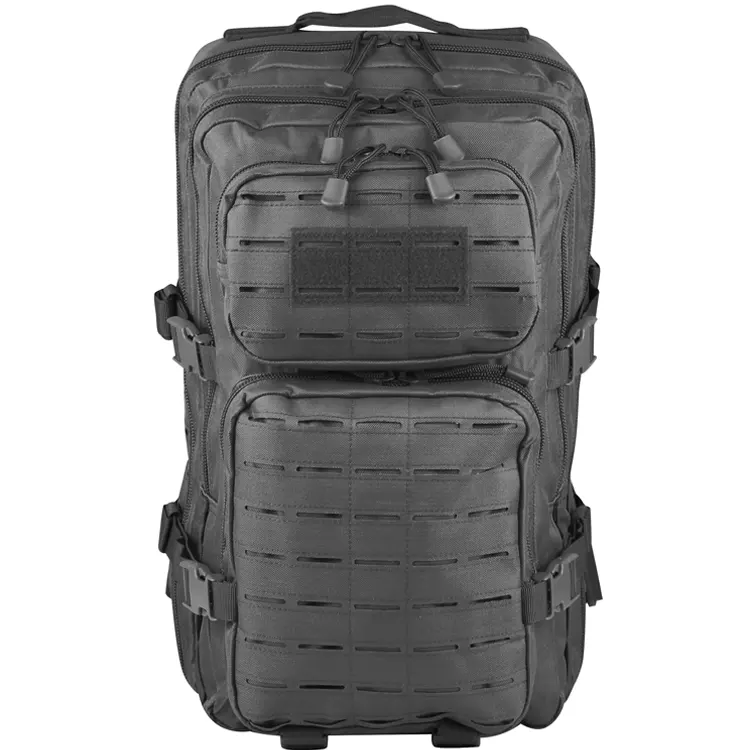 Black Assault Backpack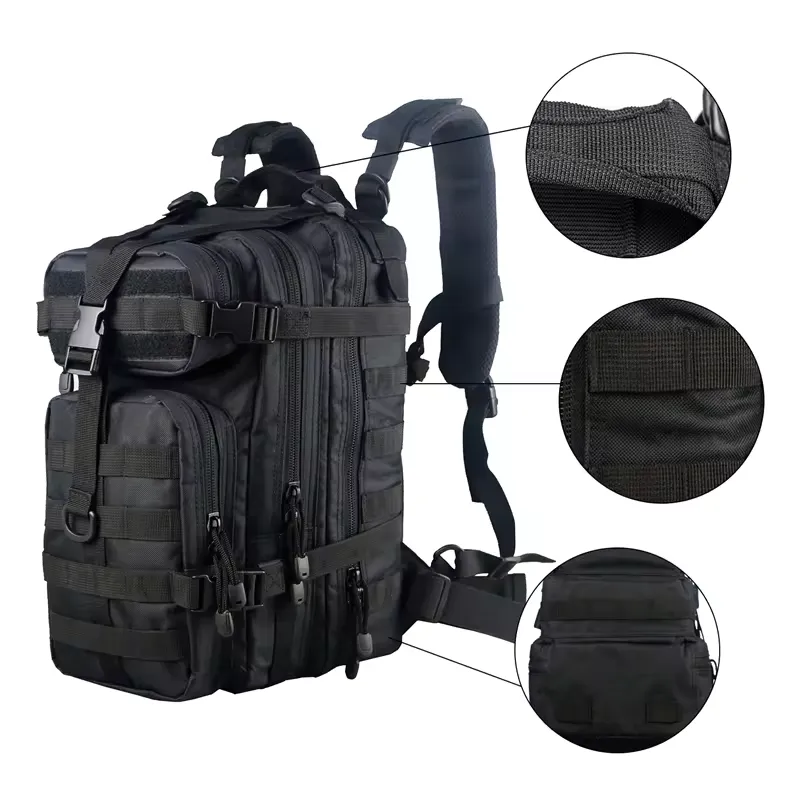
Core Design & Manufacturing Specifications of Assault Backpacks
High-performing assault packs result from deliberate engineering choices. For any assault backpack manufacturer, these elements are fundamental.
- Modular Attachment System (MOLLE/PALS): The webbing grid enables extensive customization. Quality manufacturers apply standardized MOLLE/PALS with consistent spacing—typically 1-inch gaps between rows and 1.5-inch stitch centers—to ensure compatibility with pouches and accessories. Laser-cut MOLLE provides a sleeker, lower-profile option.
- Hydration System Integration: A dedicated sleeve, often insulated, accommodates 2-3L bladders, with routing ports for the tube. Designs should work reliably with leading brands such as CamelBak and Source Tactical.
- Ergonomics and Load Management: Proper weight distribution matters for comfort and endurance. This includes a padded, breathable back panel (frequently with a flexible HDPE framesheet), a load-bearing padded hip belt to transfer weight to the hips (especially for loads over 20 lbs), contoured padded shoulder straps, and a sternum strap for stability.
Material Selection for Durability and Performance
Fabric choice largely determines a pack’s longevity and performance in demanding conditions. Established assault pack manufacturers openly share specifications.
- Primary Fabrics: Cordura® nylon in 500D or 1000D denier remains the go-to choice for excellent abrasion and tear resistance. Coatings like PVC or PU enhance water repellency.
- Підкріплення: High-stress zones (bottom panels, strap anchors) often feature heavier denier fabric or materials like Hypalon®.
- Component Quality: Reliable hardware includes YKK® zippers and ITW Nexus buckles. Stitching uses high-tenacity thread, reinforced with bar tacking at critical points.
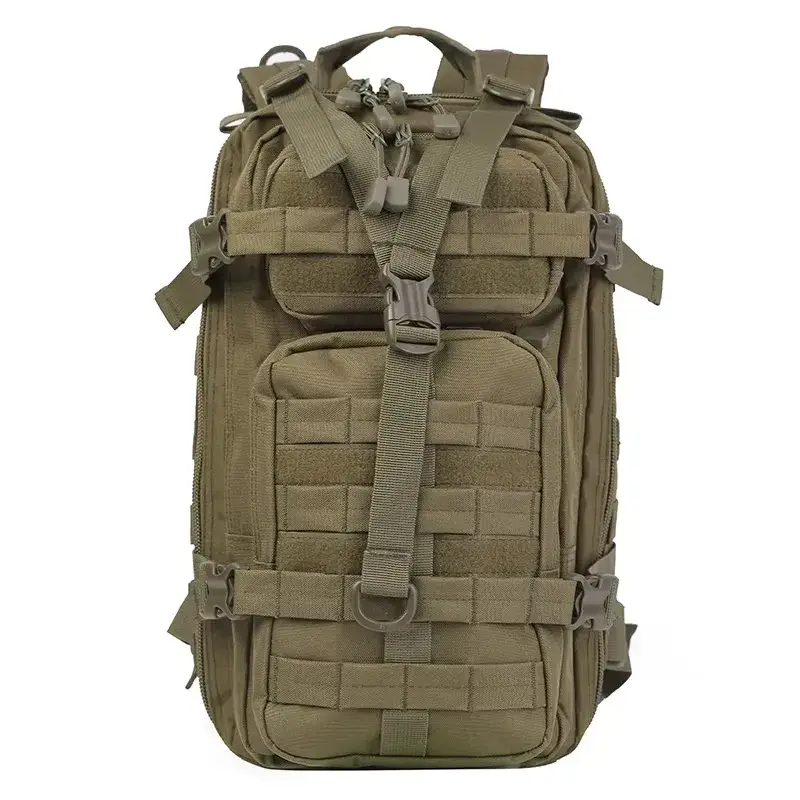 Армійський тактичний штурмовий рюкзак MOLLE
 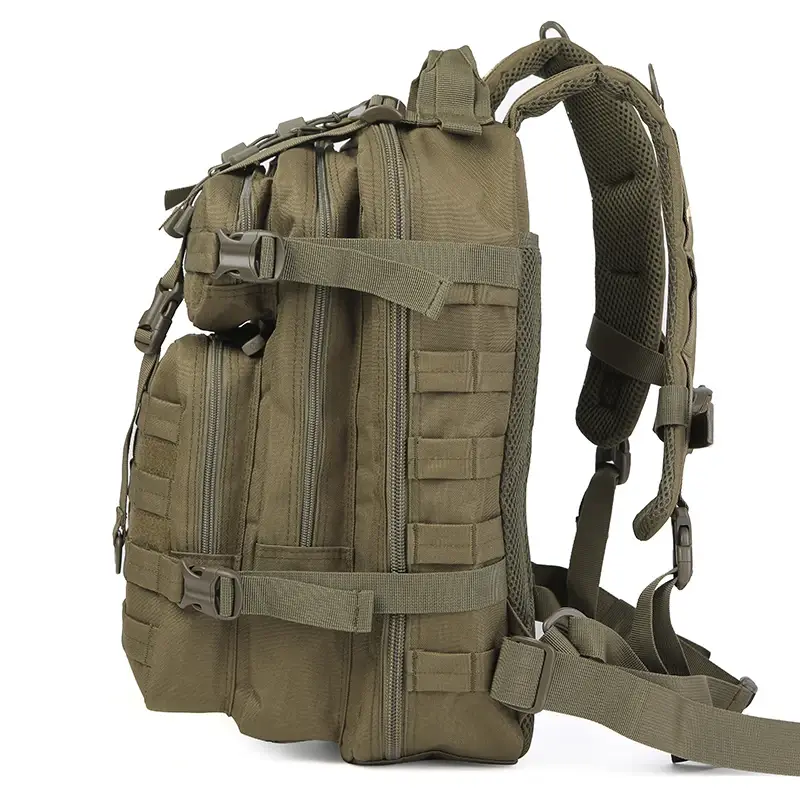 good quality MOLLE assault backpack
 The Custom OEM/ODM Process for Assault Packs
For buyers looking to develop a proprietary line, working with a custom assault backpack manufacturer involves a structured approach.
- Design Brief & Prototyping: Specify capacity, layout, MOLLE placement, colors, and features (such as radio pockets or helmet carry). The manufacturer prepares technical drawings and produces an initial sample.
- Sample Evaluation and Testing: The prototype is assessed for fit, function, and durability. Iterative feedback refines the design, and this stage confirms MOQ and pricing.
- Production and Quality Assurance: Once approved, full production starts with ongoing checks. Finished goods undergo inspection to an AQL (Acceptable Quality Level) standard prior to shipping.
Assault Pack Sourcing Considerations for Wholesale and Bulk Orders
When evaluating an assault backpack wholesale partner, important factors extend beyond unit cost.
- Manufacturing Capability Audit: Can the factory handle technical sewing, laminate heavy fabrics, and ensure color consistency? Request a facility audit or detailed production photos.
- Надійність ланцюга постачання: Does the manufacturer have stable access to key materials like Cordura® nylon? Can they provide realistic lead times that account for material sourcing and production?
- Compliance and Certification: For certain markets, requirements may include Berry Amendment compliance (relevant for U.S. government contracts) or material safety certifications (OEKO-TEX®, REACH).
Selecting the Right Assault Pack for Professional End-Users
Matching the pack to the user’s needs is a key service for distributors and suppliers.
- Military/Law Enforcement Patrol: Opt for 30-50L with extensive MOLLE, hydration compatibility, and strong hip belts. Prioritize low-visibility colors and snag-resistant designs.
- Tactical Teams (SWAT): A 20-30L pack focused on agility, with dedicated spaces for tools or medical supplies and a compact profile.
- Adventure/Preparedness Market: A 30-40L option combining tactical strength with practical outdoor elements, often positioned as a reliable 3 day assault pack for hiking or emergency scenarios.
Conclusion: Partnering with a Reliable Assault Backpack Manufacturer
Choosing an assault pack involves technical evaluations. The right partner delivers not only products but also engineering insight, material expertise, and dependable production for gear that holds up under real-world stress.
Since 2009, we have been a dedicated manufacturer and supplier, producing tactical, military, and outdoor products—including assault packs, bags, vests, pouches, and more. We offer OEM/ODM customization, wholesale options, and proven designs. Зв'яжіться з нами to discuss your needs, request a quote, or explore technical details.

 Перейти до змісту