Ransel yang digunakan oleh militer A.S. merupakan contoh peralatan penahan beban yang canggih. Ransel ini dirancang untuk daya tahan, fungsionalitas dalam berbagai misi, dan kinerja yang dapat diandalkan dari waktu ke waktu.
Bagi mereka yang berkecimpung dalam pengembangan produk, pengadaan, atau industri perlengkapan taktis dan outdoor, mempelajari sistem ini menawarkan pengetahuan yang berguna tentang bahan, ergonomi, dan standar produksi yang membentuk peralatan kelas profesional.
Analisis ini mencakup ransel utama yang digunakan saat ini, sejarah desainnya, dan detail teknis yang memandu pembuatannya baik untuk keperluan militer maupun komersial.
Evolusi Desain: Dari ALICE ke Sistem Modular
Desain ransel militer telah berubah dari waktu ke waktu untuk memenuhi tuntutan operasi yang terus berubah. Ransel ini telah beralih dari alat pembawa sederhana menjadi pengaturan modular yang fleksibel yang dapat diadaptasi oleh para prajurit sesuai kebutuhan.
- Sistem ALICE (Peralatan Pembawa Individu Ringan Serbaguna): Sistem ini keluar pada tahun 1970-an dan membawa aluminium yang ringan bingkai eksternal, yang merupakan langkah maju pada saat itu. Namun demikian, masalah mengenai cara mendistribusikan bobot dan kenyamanannya secara keseluruhan, menyebabkan penyempurnaan lebih lanjut pada desain selanjutnya. Untuk mengetahui lebih lanjut tentang latar belakangnya, lihat artikel Entri Wikipedia tentang ALICE.
- Revolusi MOLLE/PALS (Peralatan Pembawa Beban Ringan Modular / Sistem Tangga Pengikat Kantong): Diadopsi pada akhir tahun 1990-an, ini menandai perubahan besar dalam pendekatan. Ini menggunakan kisi-kisi standar anyaman 1 inci (dikenal sebagai PALS) yang memungkinkan pengguna memasang kantong dan barang lainnya di mana saja pada paket. Pengaturan ini memungkinkan para prajurit untuk menyesuaikan perlengkapan mereka untuk misi tertentu dengan mudah.
- Fokus Modern: Pembaruan terbaru bertujuan untuk mengurangi bobot perlengkapan yang tidak digunakan secara langsung dalam pertempuran, meningkatkan kesesuaian sabuk pinggul dan rangka untuk mengalihkan bobot lebih baik ke tubuh, dan menggabungkan bahan yang lebih ringan yang masih tahan dalam kondisi sulit.
Sistem Ransel Militer AS Edisi Terbaru (2025)
Sistem ini digunakan secara aktif di seluruh cabang dan menunjukkan perlengkapan bantalan beban terbaru yang dikeluarkan.
| Sistem | Cabang Utama | Kapasitas | Fitur Desain & Manufaktur Utama |
| FILBE (Keluarga Peralatan Bantalan Beban yang Ditingkatkan) | Korps Marinir AS | Paket Utama ~ 80L | Termasuk lembaran bingkai internal yang dapat dilepas dan penahan polietilena dengan kepadatan tinggi. Memiliki pegangan seret untuk memindahkan korban, banyak anyaman PALS, dan penekanan pada pemindahan berat badan ke sabuk pinggul yang empuk. Terbuat dari nilon Cordura 500D. |
| MOLLE II (Peralatan Pembawa Beban Ringan Modular II) | Angkatan Darat AS (Warisan, Masih Digunakan) | 35L - 100L+ | Opsi modular yang fleksibel yang telah digunakan selama lebih dari 20 tahun. Ini sepenuhnya mendukung pemasangan PALS/MOLLE di ransel, tas serbu, dan pembawa hidrasi. Produksi berfokus pada jahitan yang kuat dan penempatan anyaman yang tepat untuk koneksi kantong yang aman. |
NGLBE
(Peralatan Bantalan Beban Generasi Berikutnya) | Penempatan Tambahan / Peluncuran Bertahap (Saat ini dikeluarkan untuk unit-unit seperti Divisi Gunung ke-10, menggantikan MOLLE II) | 65L - 85L | Didesain agar lebih ringan dan lebih ergonomis daripada MOLLE II. Fokus pada sabuk pinggul dan tali pengaman bahu yang lebih dibentuk, mengurangi bobot kosong, dan meningkatkan ventilasi. |
| Paket Serangan (Berbagai Model) | Semua Cabang | 24L - 45L | Dibuat untuk misi yang berlangsung selama 24-72 jam. Fitur umum termasuk tempat untuk kantung hidrasi dengan bukaan selang, kantong yang mudah dijangkau, dan anyaman PALS yang cukup untuk menambahkan perlengkapan misi. Ini lebih mengutamakan pergerakan cepat daripada penyimpanan yang besar. |
Catatan tentang Operasi Khusus: Tim seperti Pasukan Khusus sering menggunakan “Otoritas Transaksi Lainnya” (OTA) untuk paket yang tersedia secara komersial dari produsen seperti Eagle Industries, London Bridge Trading (LBT), atau Crye Precision, asalkan memenuhi atau melampaui persyaratan kinerja yang ketat.
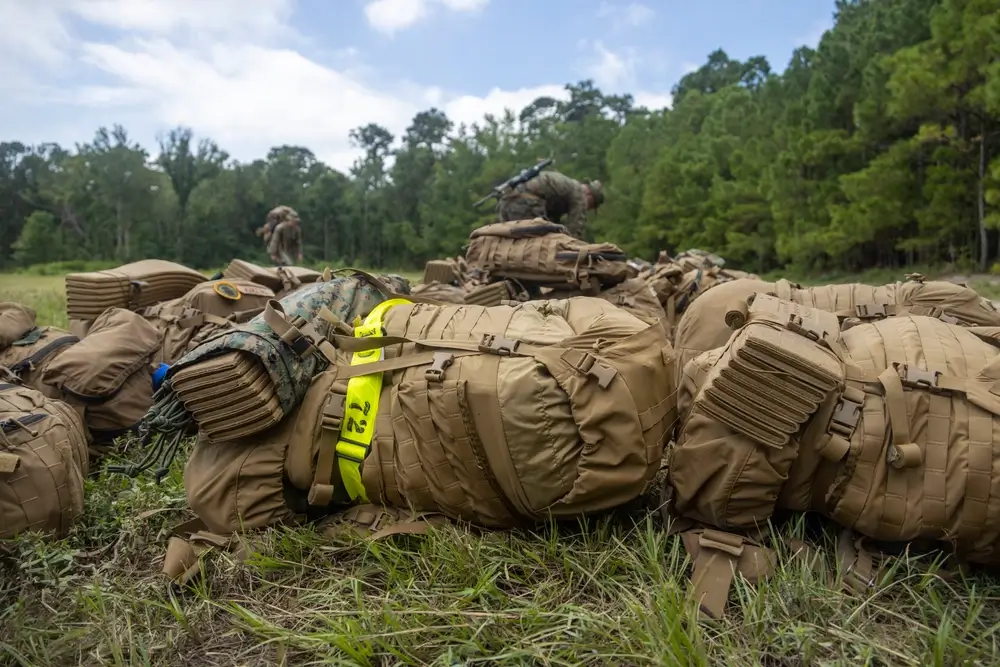 Kredit@DVIDS
Spesifikasi Utama dan Wawasan Manufaktur
Apa yang membuat paket militer ini bekerja dengan baik berasal dari standar ketat yang sangat penting dalam produksi perlengkapan profesional.
- Standar Material: Kain biasanya berkisar dari Nilon Cordura 500D hingga 1000D. Pilihan ini memberikan perpaduan yang baik antara ketahanan terhadap keausan, kekuatan sobek, dan bobot yang ringan. Lapisan poliuretan menambah perlindungan terhadap air.
- Integritas Konstruksi: Area yang berada di bawah tekanan berat-seperti di mana sabuk pinggul, tali bahu, atau pegangan terhubung ke paket-mendapatkan penguatan ekstra melalui jahitan kotak dan paku payung batang. Memeriksa hal ini selama produksi adalah kunci kualitas.
- Presisi Modularitas: The Kisi-kisi MOLLE/PALS mengikuti aturan jarak 1 inci yang tepat. Jahitan yang tidak rata di sini bisa menyebabkan masalah dalam memasang kantong dan mengarah ke kualitas yang lebih rendah.
- Pemindahan Beban yang Ergonomis: Rangka bagian dalam (seperti lembaran HDPE atau penahan aluminium) dan sabuk pinggul yang empuk bekerja sama untuk bergerak 60-80% dari berat beban ke pinggul. Pendekatan ini penting untuk paket yang dimaksudkan untuk membawa barang yang berat.
Dari Spesifikasi Militer hingga Manufaktur Komersial & Kontrak
Untuk produsen ransel militer, mengetahui sistem ini lebih dari sekadar teori-ini membentuk cara membuat perlengkapan yang dapat diandalkan untuk klien di bidang yang menuntut.
- Persyaratan Penerjemahan: Standar seperti MIL-STD-810 (dari Badan Logistik Pertahanan) menetapkan pengujian untuk hal-hal seperti lingkungan yang ekstrem. Proyek komersial mungkin tidak memerlukan persetujuan militer sepenuhnya, tetapi menerapkan pengujian untuk keausan, ketahanan terhadap air, dan daya tahan ritsleting membantu memastikan kualitas.
- Adaptasi untuk Merek Komersial: Perusahaan yang menginginkan paket yang “terinspirasi dari militer” harus mempertimbangkan ketangguhan yang nyata terhadap faktor-faktor seperti biaya, berat, dan gaya. Ini berarti memilih bahan dengan bijak (misalnya, nilon 500D di atas 1000D) dan menambahkan bala bantuan hanya jika diperlukan.
- Keharusan Penyesuaian: Mirip dengan cara tentara menyiapkan sistem MOLLE mereka, pengguna di area seperti pemadaman kebakaran hutan atau tanggap darurat membutuhkan perlengkapan yang sesuai dengan peran mereka. Pilihannya bisa berupa tata letak panel MOLLE khusus, slot untuk radio atau tangki oksigen, atau warna dan logo yang disesuaikan dengan merek klien.
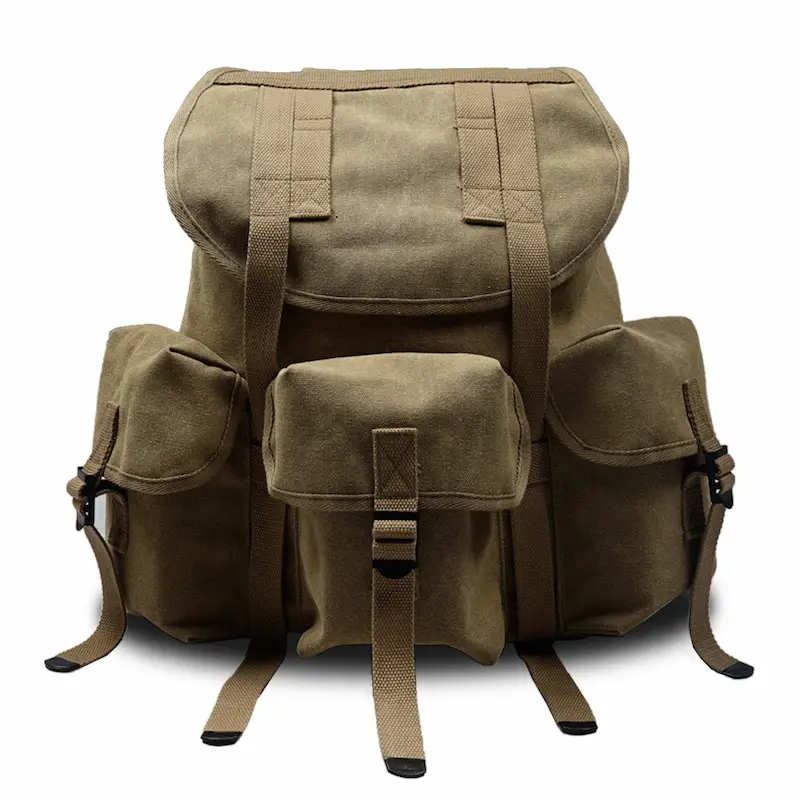 tas ransel kanvas bergaya ALICE yang tahan banting
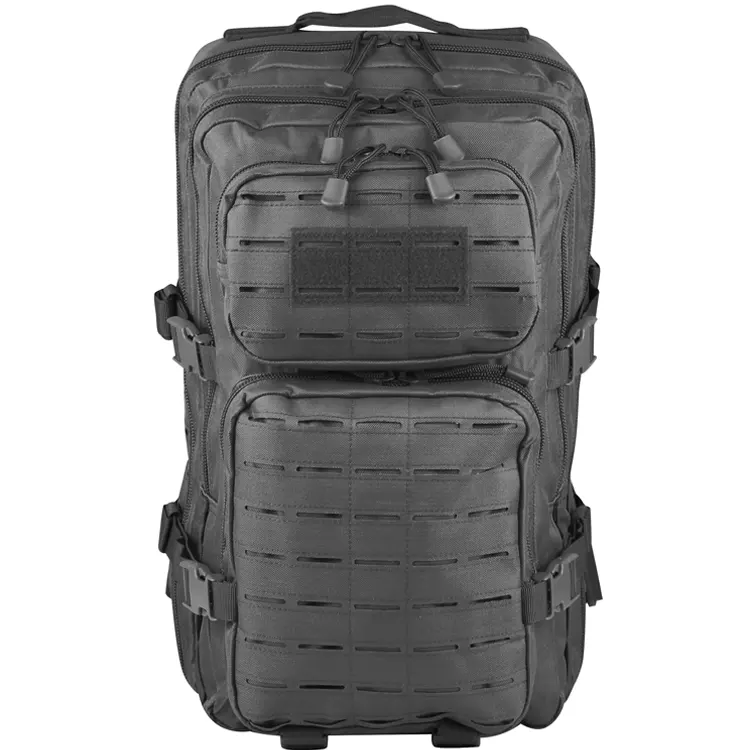 paket serangan ransel kelas militer
Bermitra dengan Produsen Ransel Militer Profesional
Untuk membuat kemasan yang memenuhi standar kinerja tinggi ini, diperlukan mitra manufaktur dengan keahlian khusus dalam bahan teknis, konstruksi tugas berat, dan sistem modular.
Dengan lebih dari 15 tahun di industri perlengkapan taktis sejak 2009, perusahaan kami mengkhususkan diri dalam menyesuaikan dan memproduksi barang-barang seperti tas, rompi, kantong modular, dan banyak lagi untuk keperluan militer, luar ruangan, dan profesional.
Peran kami tidak hanya terbatas pada produksi saja:
- Desain untuk Kemampuan Produksi (DFM): Panduan untuk menyempurnakan desain untuk meningkatkan kekuatan sekaligus menekan biaya.
- Pembuatan Prototipe dan Pengujian: Menangani putaran sampel untuk memeriksa kesesuaian, fungsi, dan kinerja dunia nyata sebelum menjalankannya secara penuh.
- Jaminan Rantai Pasokan: Menemukan bahan dan suku cadang tepercaya, seperti ritsleting YKK dan gesper ITW Nexus, untuk mencapai spesifikasi yang tepat.
- Produksi yang dapat diskalakan: Dari pesanan khusus kecil untuk tim khusus hingga batch OEM besar untuk merek.
Jika Anda sedang mengembangkan peralatan penahan beban profesional dan membutuhkan keahlian manufaktur yang berakar pada pemahaman tentang sistem kelas militer, kami siap mendukung proyek Anda. Hubungi kami untuk mendiskusikan spesifikasi Anda atau meminta konsultasi manufaktur.