In professional procurement for defense, law enforcement, and security sectors, the term “MIL-SPEC” signifies a benchmark for performance and reliability. For a tactical gear manufacturer, designing to these standards is a commitment to rigorous engineering and quality control. For a buyer, it provides a key framework for evaluating equipment.
This guide explains the purpose of U.S. Military Specifications (MIL-SPEC), highlights key standards relevant to personal equipment, and outlines what genuine compliance entails from a manufacturing perspective.
What Are MIL-SPEC Standards?
MIL-SPEC is an umbrella term for the vast collection of Military Specifications, Standards, and Performance Specifications published by the United States Department of Defense (DoD). Their primary purpose is to ensure interoperability, reliability, and safety of equipment used by military personnel.
A specification (e.g., MIL-DTL-32439) defines the detailed requirements for a specific material or product, including its physical properties, dimensions, and chemical composition. A standard (e.g., MIL-STD-810) defines test methods and procedures to verify that equipment can withstand environmental stresses.
Why MIL-SPEC Matters in Professional Procurement
For organizations whose personnel operate in high-risk environments, specifying MIL-SPEC-compliant gear is a risk-mitigation strategy. It offers:
- Verified Performance: Products tested to standards like MIL-STD-810 have undergone documented, repeatable tests for shock, vibration, temperature extremes, humidity, and other factors.
- Interoperability: Standards ensure that gear from different manufacturers can work together. The universal adoption of the MOLLE/PALS webbing system (governed by its own specification) is a prime example, allowing pouches and accessories to be compatible across platforms.
- Supply Chain Consistency: By defining exact material requirements, MIL-SPEC allows different manufacturers to produce components that meet the same minimum performance threshold, ensuring consistency in multi-vendor supply chains.
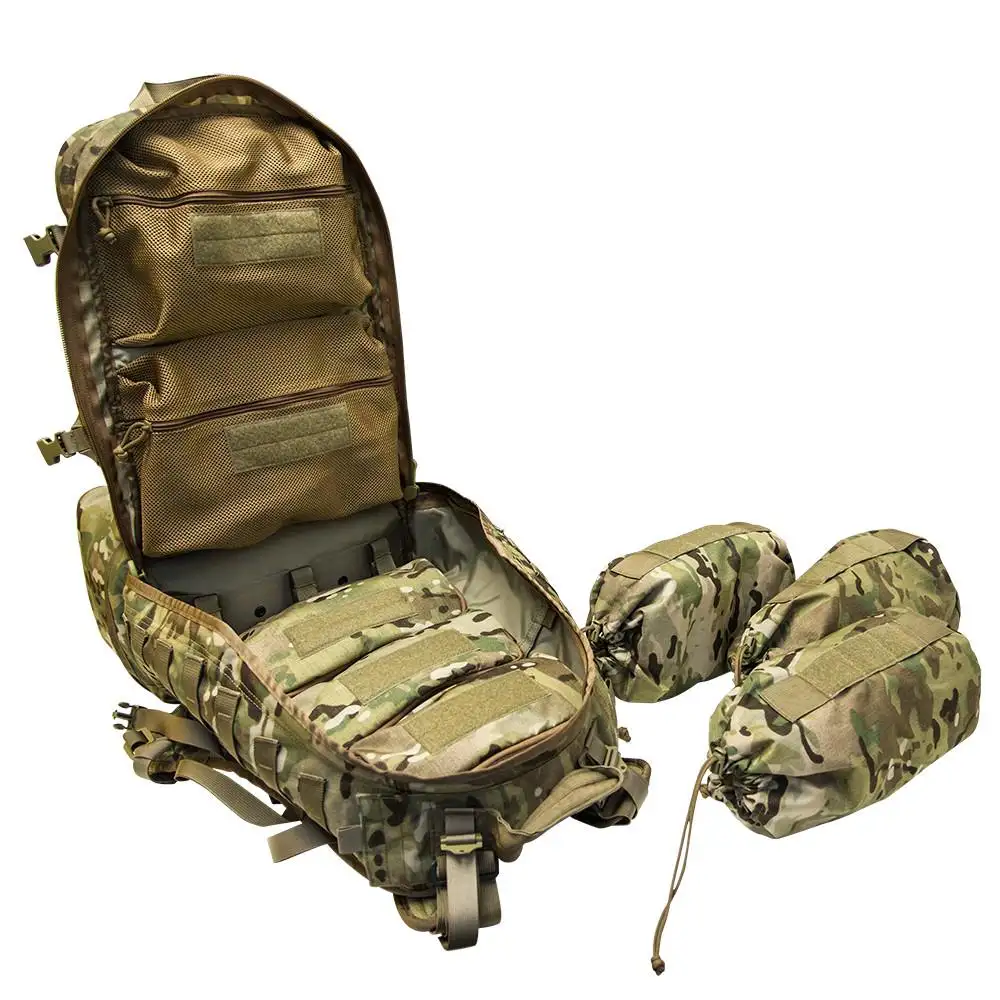
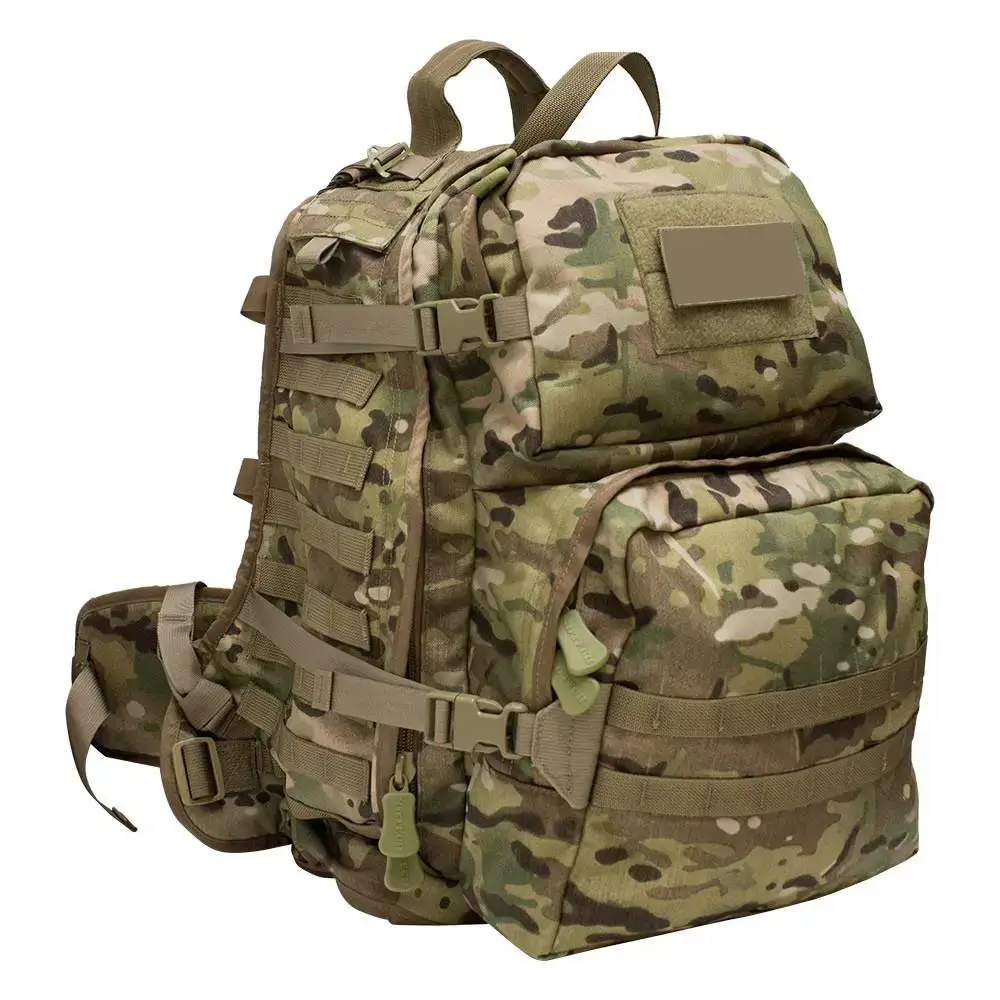
Key MIL-SPEC Documents Relevant to Tactical Gear
Hundreds of documents exist, but several are fundamental to soft goods and personal equipment:
- MIL-STD-810, “Environmental Engineering Considerations and Laboratory Tests”: This is arguably the most cited standard. It does not prescribe design but provides standardized test methodologies to assess how equipment withstands environmental stresses. A manufacturer claiming “tested to MIL-STD-810” should be able to specify which test methods (e.g., Procedure I – High Temperature) were applied.
- MIL-DTL-32439, “Cloth, Duck, Textured Nylon”: This specification covers many of the coated fabrics commonly used in tactical gear, such as water-resistant nylon. It defines requirements for tear strength, bursting strength, and coating adhesion.
- MIL-W-17337, “Webbing, Nylon, Tubular”: This governs the webbing used in load-bearing equipment, defining strength, dimensional tolerance, and colorfastness requirements.
- MIL-PRF-90272, “Fasteners, Plastic”: This covers components like the ladder-lock buckles ubiquitous in tactical packs and vests, ensuring they meet minimum strength and durability standards.
Important Note on Body Armor: Modern individual ballistic protection for the U.S. military, such as the Enhanced Small Arms Protective Insert (ESAPI), is governed by detailed, classified performance specifications. For commercial and law enforcement sales, the National Institute of Justice (NIJ) Standard-0101.06 is the universally recognized benchmark, not a generic MIL-SPEC.
These standards are updated regularly to reflect advancements in technology and materials. You can access the latest versions through . ASSIST database, maintained by the DoD.
MIL-SPEC vs. “Mil-Style” or Commercial Gear
A distinction exists:
- MIL-SPEC Compliant: The product or material has been manufactured and tested to meet the exact requirements of an active DoD specification. This requires traceable materials, controlled processes, and verifiable test data.
- “Mil-Style” or Commercial Grade: The product uses similar design aesthetics or materials but has not been manufactured or tested to the formal specification. It may be high quality, but it lacks the verified, standardized performance pedigree.
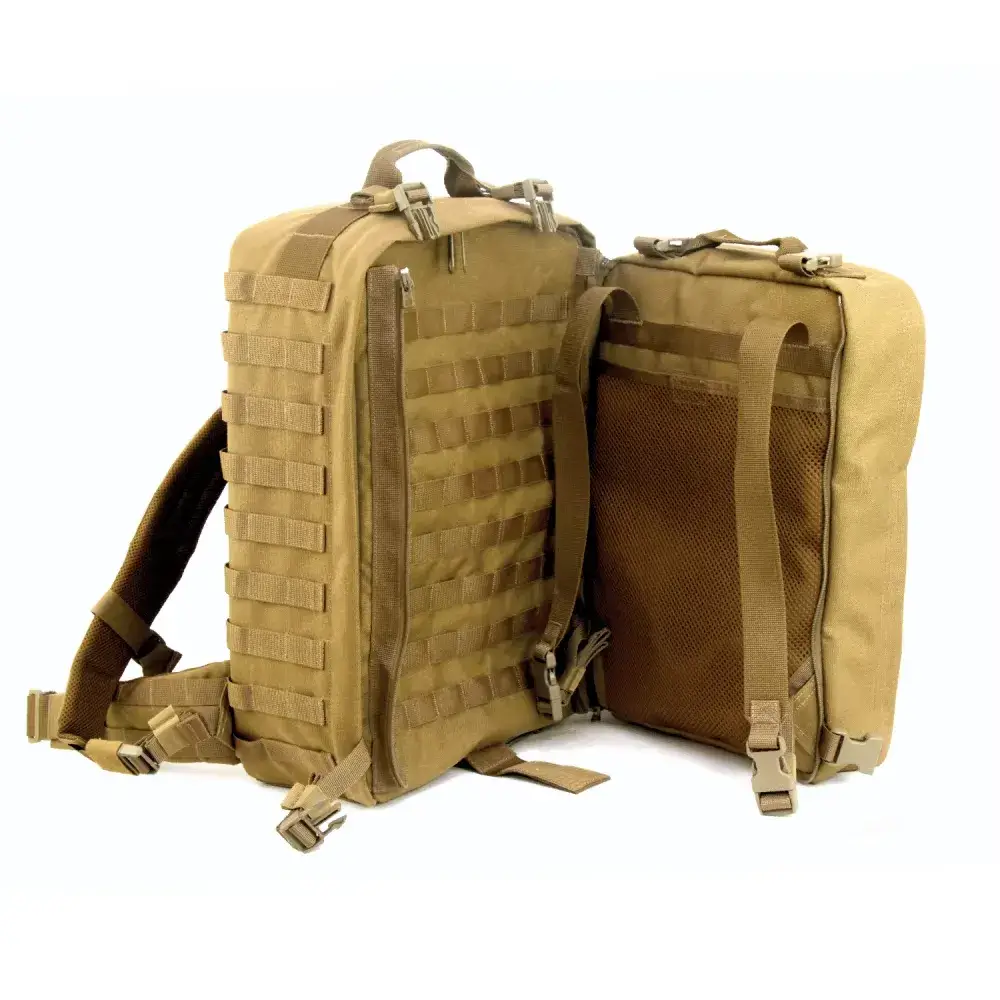 Profile view of tan tactical bag with side zipper, MOLLE webbing, and quick-release buckles
 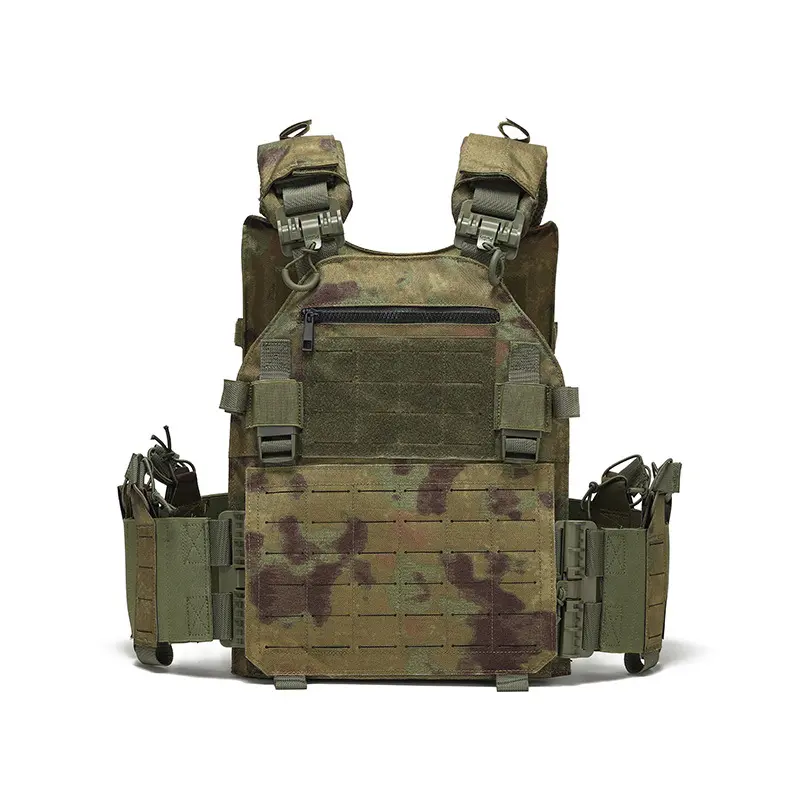 Camo Tactical Plate Carrier – Front with MOLLE & Chest Zipper Pocket
 The Manufacturer’s Path to MIL-SPEC Compliance
For a military gear manufacturer, true compliance is an integrated part of the production process, not a post-production claim. Key elements include:
- Controlled Material Sourcing: Using fabrics, webbing, and hardware from suppliers who can provide Certified Mill Test Reports (CMTRs) or other documentation proving the materials themselves meet the relevant specifications (e.g., MIL-PRF-32439 fabric).
- Rigorous In-House Quality Control (QC): Implementing inspection procedures at each stage of production (Incoming Material, In-Process, Final Inspection) to ensure consistent adherence to design and workmanship standards.
- Formal Testing and Documentation: Conducting required tests, either in-house or through an accredited third-party laboratory, and maintaining detailed records. This creates an auditable trail of compliance.
- Configuration and Revision Control: Ensuring that the product build matches the exact design and material revision that was qualified.
Verifying Claims and Partnering with a Qualified Manufacturer
For procurement officers, due diligence is essential. When evaluating a supplier:
- Request Documentation: Ask for the specific MIL-SPEC number the product complies with and for evidence of testing or material certifications.
- Assess Manufacturing Capabilities: Inquire about their QC processes, material sourcing controls, and in-house testing equipment. A manufacturer with a structured QC system is more likely to produce consistent, reliable gear.
- Understand Scope: Clarify whether the claim is for the final assembled product or for the materials used in its construction. Both are valid but represent different levels of compliance.
Išvada
Understanding MIL-SPEC allows buyers to move beyond marketing terms and make informed sourcing decisions based on verified performance. For a manufacturer, it represents a disciplined approach to quality that builds trust with demanding clients.
Kaip professional tactical gear manufacturer, our commitment to quality is demonstrated through controlled processes and meticulous attention to detail. We utilize MIL-SPEC materials and construction techniques to produce durable, reliable plokštelių laikikliai, kuprinės, and load-bearing equipment for our global clients.
If you are sourcing gear where documented performance and manufacturing consistency are priorities, we welcome the opportunity to discuss your requirements and demonstrate our capabilities.












 Pereiti prie turinio